

The Diamond Guide
Lab-grown diamonds, beautifully explained
Every diamond at The V Jewels is a real diamond — grown rather than mined, graded by independent laboratories, and cut to bring out every flash of light. Here is everything you need to choose yours with confidence.

Round brilliant · 57 facets
01 · The Essentials
What is a lab-grown diamond?
A lab-grown diamond is a diamond in every scientific sense: carbon atoms locked into the same rigid cubic lattice that gives a mined diamond its hardness and its fire. The difference is where it forms. Instead of billions of years under the earth's crust, it grows over a few weeks inside specialist equipment that recreates — with remarkable precision — the conditions in which diamonds are born.
Once grown, each rough crystal is cut and polished by hand, just like any fine diamond, then sent to an independent laboratory for grading. The result is a stone that no jeweler can distinguish from a mined diamond without advanced testing equipment.
- Composition
- Pure carbon
- The same element, in the same crystal structure, as every natural diamond.
- Hardness
- 10 Mohs
- The hardest material on earth — resistant to scratches from everyday wear.
- Refractive index
- 2.42
- The optical property behind a diamond’s brilliance, fire and sparkle.
02 · The Science
Two ways to grow a diamond
Every lab-grown diamond starts with a tiny slice of existing diamond, called a seed. Growers use one of two proven methods to build new diamond crystal upon it, atom by atom.

CVD
Chemical Vapour Deposition
Diamond seeds are placed in a sealed vacuum chamber filled with a carbon-rich gas, usually methane and hydrogen. Microwaves heat the gas into a glowing plasma, freeing carbon atoms that settle onto the seeds and build the crystal up in fine layers over several weeks.
- Growth in thin, even layers
- Excellent clarity potential
- Typically 3–6 weeks per crystal

HPHT
High Pressure, High Temperature
A press recreates the crushing force and intense heat found deep within the earth. Carbon dissolves in a molten metal solvent and crystallises onto the diamond seed, growing a single crystal from the centre outwards.
- Mirrors natural formation
- Often exceptionally colourless
- Grows in days to weeks
Physically identical
The same hardness, density and thermal conductivity — durable enough for a lifetime of everyday wear.
Chemically identical
Pure carbon in a cubic crystal lattice. Not a coating, a composite or a simulant — a diamond, through and through.
Optically identical
The same refraction and dispersion, so a well-cut lab-grown diamond shows the same brilliance, fire and scintillation.
03 · Quality
The 4Cs, made simple
Lab-grown diamonds are graded on exactly the same scales as mined diamonds. Understanding the 4Cs helps you decide where to prioritise — and where you can save without seeing a difference.
The most important C
Cut: where the sparkle comes from
Cut describes how well a diamond's facets are angled and proportioned to return light to your eye. It has the greatest influence on beauty: a superbly cut diamond can look larger and brighter than a heavier stone cut poorly. Every centre diamond we set is graded Very Good, Excellent or Ideal for cut.
Too shallow
Light slips out through the base, leaving a glassy centre.
Ideal
Light bounces between the facets and returns to the eye.
Too deep
Light leaks from the sides and the stone looks darker.
D to Z
Colour: the absence of tint
Diamond colour is graded from D (completely colourless) down the alphabet as a faint warmth increases. Differences between neighbouring grades are almost impossible to see once a diamond is set. Our centre diamonds are D to H — colourless to near-colourless.
- D
- E
- F
- G
- H
- I
- J
- K
FL to I3
Clarity: nature’s fingerprints
Clarity grades the tiny internal features, called inclusions, that form as a diamond grows. Most are invisible without 10x magnification. Our centre diamonds range from Flawless to SI1, and our gemologists confirm that every one is eye-clean.
- FL – IFFlawless
- VVS1 – VVS2Very, very slightly included
- VS1 – VS2Very slightly included
- SI1 – SI2Slightly included
- I1 – I3Included
Weight, not size
Carat: the weight of the stone
One carat weighs 0.2 grams. Carat measures weight rather than visible size, so two diamonds of the same weight can face up differently depending on their cut and shape. Below is the approximate diameter of well-cut round diamonds.
- 0.50 ct≈ 5.2 mm
- 1.00 ct≈ 6.5 mm
- 1.50 ct≈ 7.4 mm
- 2.00 ct≈ 8.2 mm
- 3.00 ct≈ 9.4 mm
- 4.00 ct≈ 10.3 mm
And a fifth consideration
Ten shapes, one standard
Shape is a matter of personal taste. Explore pieces by the shape you love.
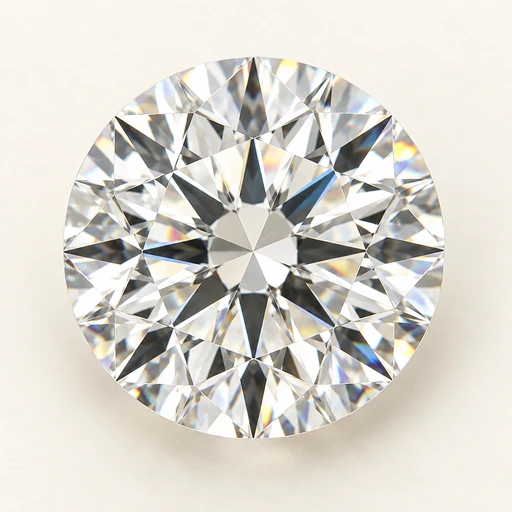 RoundThe most brilliant cut — timeless and endlessly sparkling.
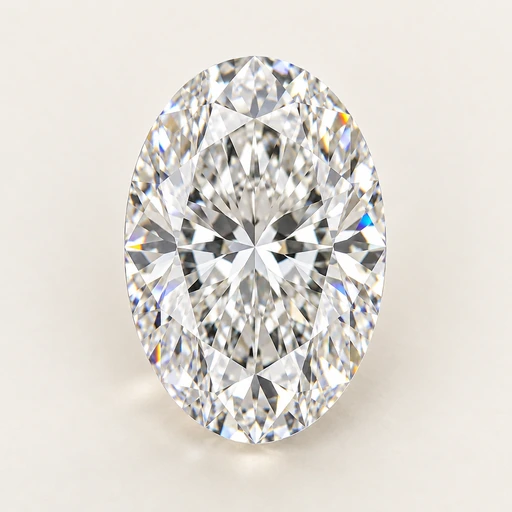 OvalElongated elegance that flatters the hand.
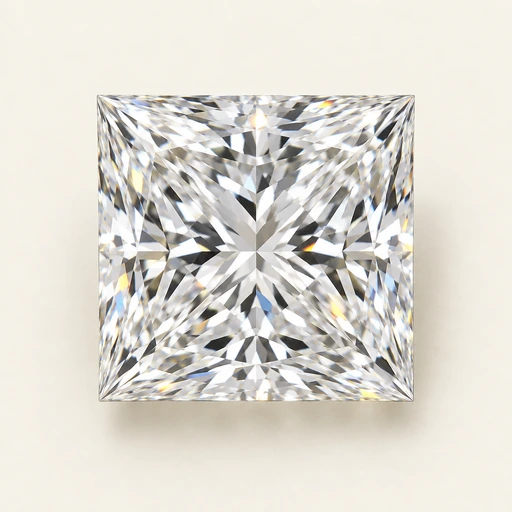 PrincessCrisp square lines with modern fire.
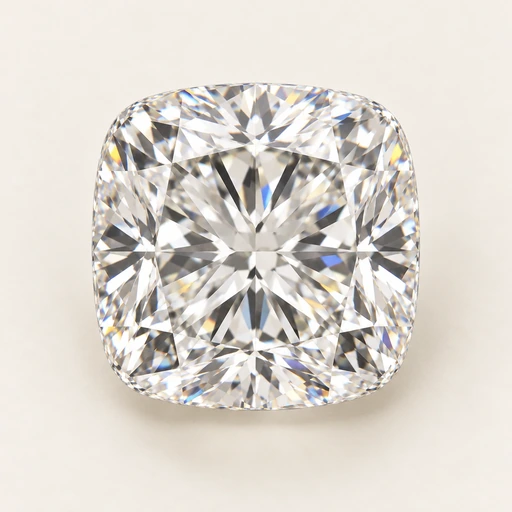 CushionSoft pillowed corners and romantic glow.
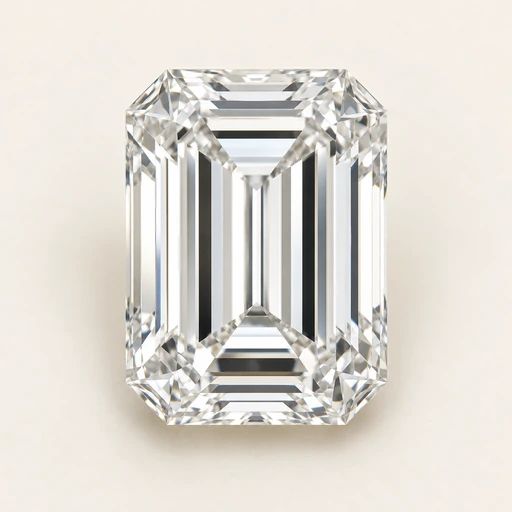 EmeraldHall-of-mirrors step facets, quietly glamorous.
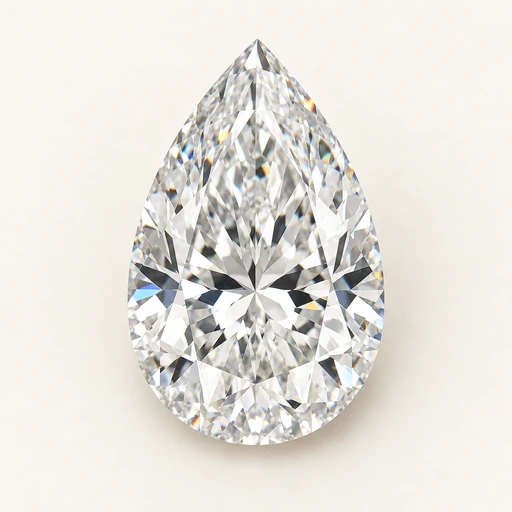 PearA graceful teardrop — part round, part marquise.
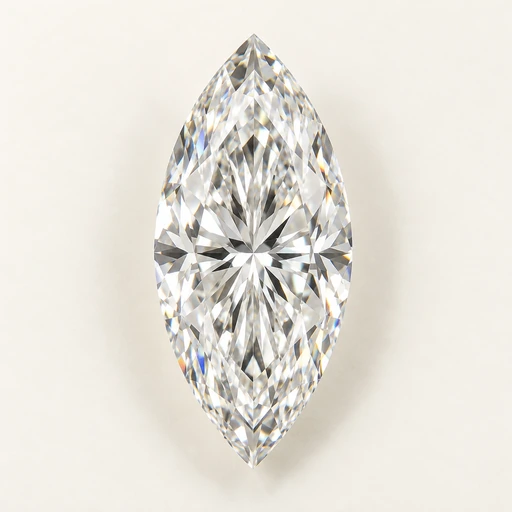 MarquiseRegal and elongated, maximising carat presence.
 RadiantTrimmed corners with brilliant-cut sparkle.
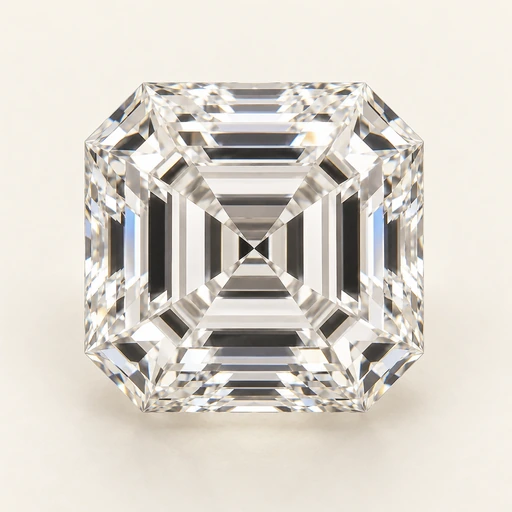 AsscherArt Deco step cut with a mesmerising windmill.
 HeartThe ultimate symbol of love, precisely cut.
04 · Trust
Independently certified by IGI & GIA
Every centre diamond from The V Jewels is accompanied by a grading report from the International Gemological Institute (IGI) or the Gemological Institute of America (GIA) — two of the world's most respected independent laboratories. The report confirms that your diamond is laboratory-grown and records its measurements and quality in detail, so you know exactly what you are buying.
How to verify your report
- 1Find the report number printed on your grading report — it also appears in your order confirmation.
- 2Look closely at the diamond’s girdle (its outer edge) under a jeweler’s loupe: most graded stones carry the same number in a microscopic laser inscription.
- 3Visit the laboratory’s official website — igi.org or gia.edu — and enter the number in its report-check service.
- 4Confirm that the shape, carat weight, colour, clarity and measurements match your report and your diamond.
Laboratory-Grown Diamond Report
Sample report
- Shape & cutting style
- Oval brilliant
- Carat weight
- 1.52 ct
- Colour grade
- E
- Clarity grade
- VVS2
- Polish
- Excellent
- Symmetry
- Excellent
- Fluorescence
- None
- Growth method
- CVD
- Measurements
- 9.12 × 6.48 × 4.01 mm
- Inscription
- Report number on girdle
05 · Side by Side
Lab-grown vs mined diamonds
The same diamond in every way you can see and feel. The differences lie in where it comes from — and what it costs.
| Property | Lab-grown diamond | Mined diamond |
|---|---|---|
| Chemical composition | Pure carbon (C) | Pure carbon (C) |
| Crystal structure | Cubic | Cubic |
| Hardness (Mohs) | 10 | 10 |
| Refractive index | 2.42 | 2.42 |
| Brilliance & fire | Identical when equally well cut | Identical when equally well cut |
| Graded on the 4Cs | Yes — by IGI or GIA | Yes — by IGI or GIA |
| Origin | Grown in weeks under controlled conditions | Formed over billions of years, then mined |
| Traceability | Known grower and growth method | Often passes through many hands |
| Mining required | None | Large-scale extraction |
| Price for the same size & quality | Considerably lower | Higher |
06 · A Considered Choice
Responsibility & value, without compromise
No mining
Lab-grown diamonds require no excavation of land or riverbeds. We work with established growers who disclose how and where every stone is produced, so each diamond’s origin is known.
A shorter journey
From grower to cutter to our own workshop, our diamonds pass through far fewer hands. That transparency is reflected in the price you pay — and in the certainty of where your diamond began.
More diamond for your budget
Because lab-grown diamonds cost considerably less than mined diamonds of the same quality, you can choose a larger stone, a finer grade or a more elaborate setting for the same investment.
Every piece is then made by our own artisans — read about our six-step manufacturing process.
Questions
Your questions, answered
Are lab-grown diamonds real diamonds?
Yes. They are made of the same pure carbon, arranged in the same cubic crystal structure, as diamonds formed in the earth. They are not simulants like cubic zirconia or moissanite, which are entirely different materials.
Can a jeweler tell a lab-grown diamond from a mined one?
Not by eye, and not with a standard jeweler’s loupe. Telling them apart requires specialist laboratory instruments that detect tiny differences in growth patterns and trace elements. That is why every centre diamond comes with an independent grading report stating its origin.
Will a lab-grown diamond last forever?
A lab-grown diamond scores 10 on the Mohs hardness scale, exactly like a mined diamond. It will not cloud, fade or lose its sparkle, and with sensible care it can be worn every day for generations.
Why do lab-grown diamonds cost less?
Growing a diamond takes weeks rather than billions of years, and its journey to you is far shorter, with no mining and fewer intermediaries. The diamond itself is no less beautiful or durable — you simply pay less for the same size and quality.
Do lab-grown diamonds hold their value?
Fine jewelry of any kind rarely resells for its original retail price, and the resale market for lab-grown diamonds is still developing. We encourage you to choose a diamond for its beauty and meaning rather than as a financial investment.
Is a CVD diamond better than an HPHT diamond?
Neither method is inherently better. Both produce genuine diamonds, and the finished stone is judged on its own cut, colour, clarity and carat. Many CVD diamonds also receive a post-growth treatment to refine their colour, which is disclosed on the grading report.
Should I choose an IGI or a GIA report?
Both are independent, internationally respected laboratories. IGI grades the majority of lab-grown diamonds sold worldwide and provides full 4Cs grading, while GIA issues its own laboratory-grown diamond reports. Either way, the report verifies exactly what you are buying.
Are lab-grown diamonds a responsible choice?
They require no mining and their origin is fully traceable, which many people value. Growing diamonds does use significant energy, so we work with established growers who disclose how and where every stone is produced.
Find your diamond
Ready to choose yours?
Explore engagement rings set with certified lab-grown diamonds, or browse every design in our collection.